Welcome to Spikenard and Myrrh!

No matter where we may be in our health management, there is always something that can be done to enhance and contribute to our overall health. ! The desire is to foremost share, learn, make available and to revive the connection of self-responsibility to our overall health. We welcome you to visit the blog from time to time to expand on you already pre-existing knowledge of health management, to read interesting historical information, stories, testimonies of people’ s personal experiences with essential oils and adjunct body therapies as well as to leave your very own footprint of knowledge on the blog.

Wednesday, November 7, 2012

The influence of food energetics over health


The energies of foods refer to their capacity to generate sensations - either hot or cold - in the human body. The five kinds of energy are cold, hot, warm, cool and neutral, and this refers not to the state of the food but its effect on our bodies. For example, tea has a cool energy, it means that when we drink hot tea, it generates cool energy and it is therefore considered a cool beverage. Shortly after you have drunk hot tea, the heat begins to fade quickly and it begins to generate cool energy internally, allowing your body to cool off.

It is important to know about the energies of food because different energies act upon the human body in different ways and affect our state of health. If a person suffers from cold rheumatism and the pain is particularly severe on cold winter day, eating foods with a warm or hot energy shall relieve the pain considerably. Or if a person suffers from skin eruptions that worsen when exposed to heat, it is beneficial to eat foods with a cold or cool energy to relieve the symptoms.

To seek a balance in diet, we can define food as predominantly yin or yang. If you eat predominantly yin foods, your body will be capable of producing more yin energy - darker, slower-moving and colder. In contrast, eating predominantly yang foods will produce more yang energy - faster, hotter and much more energetic. It's helpful to remember certain rules to determine the type of energy a food produces:
          
     If it grows in the air and sunshine, it is probably yang;
     If it grows in the earth and darkness, it is probably yin;
     If it is soft, wet and cool, it is more yin;
     if it is hard, dry and spicy, it is more yang.

The five flavors of foods

 
    Bean curd is sweet in flavor, cool in energy and tends to move downward and inward. The flavor of food is very important because it helps to send nutrition via the meridians to the corresponding organs. If we eat a balanced meal with many tastes, we feel satisfied and don't binge. The five flavors of food include pungent (acrid), sweet, sour, bitter, and salty.
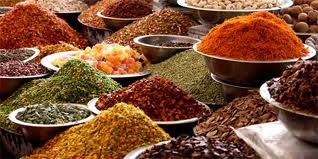

Some foods may possess two different flavors or a bland flavor which means it has little or not taste. For example, cucumbers have both sweet and bland flavors. Foods with a bland flavor usually promote urination and may be used as diuretic, coix seed and wax gourd are outstanding examples of this kind. In addition, foods with a strong scent are categorized as "aromatic", such as basil, fennel, coriander, peppermint and citrus fruits. These foods can be eaten to enliven the spleen, stimulate appetite, promote qi(vital energy) circulation, resolve dampness and turbidity, refresh the mind, open up the orifices, and detoxify.

The movements of foods


     Food acts on the body through specialized movements. Depending on the properties of food. Food moves in different regions within the body and can drive qi (vital energy) in the same direction as well. TCM claims that disease is caused when any of the external or exogenous evils exert too much influence on our body, foods that have specialized movements can be used to counter these evils. For example, when a person suffers from mild flu (which caused by exogenous wind invasion), foods with a floating action such as green onion and fresh ginger can expel the evils out of the body.


In general, foods like leaves and flowers and those with light and loose qualities possess a tendency to move upwards or outwards; while roots and seeds and fruits that are heavy and hard in qualities possess a tendency to move downwards or inwards. However there are many other exceptions and some foods can move in two directions e.g. lettuce possess both downward and inward movements.
 

         Honey is sweet in flavor and neutral in energy, it can moisten the inner body, promote bowel movements, tonify the middle burner, slow down acute reactions, detoxify and lower blood pressure. Two other terms are also used to describe the movements of foods: glossy (sliding) and astringent. Glossy foods such as honey, banana, white fungus and milk facilitate movement by acting as a lubricant. This is why these are good for constipation and internal dryness. On the other hand, astringent foods such as guava, plum, euryale seed and lotus seed slow down movement, which is good for diarrhea and seminal emission. The movements of foods can be changed through certain methods of cooking.

Saturday, September 8, 2012

The energetic movements of food

The four movements of food: upward, downward, outward and inward.


LIFTING

TCM food movements: Lifting    
Actions: To move from lower region towards upper region   
 Effects: The upward movements arrest diarrhea, and hold internal organs in their proper places (to prevent them prolapse or sinking)   
 Food samples: Wine    
 Associated properties of food: Warm or hot in energy, pungent or sweet in flavor

FLOATING


TCM food movements: Floating    
Actions: To move from inside towards outside  
  Effects: The outward movements induce perspiration and dissipate body heat    
Food samples: Ginger
Associated properties of food: Warm or hot in energy, pungent or sweet in flavor

LOWERING

TCM food movements: Lowering    
Actions: To move from upper region towards lower region   
 Effects: The downward movements relieve vomiting, hiccupping, coughing and panting   
 Food samples: Salt    
Associated properties of food: Cool or cold in energy, sour or bitter or salty in flavor

SINKING

TCM food movements: Sinking   
 Actions: To move from outside towards inside 
Food samples: Vinegar  
Effects: The inward movements slow down bowel movements and relieve abdominal distention
Associated properties of food: Cool or cold in energy, sour or bitter or salty in flavor

Thursday, September 6, 2012

The five flavors of food

      
Flavors : Pungent    
Organs affected : Lung, Large intestine    
   Effects: Promote distributions and circulations, and stimulate appetite.    

Food samples: Fresh ginger, onion, leeks, green onion, Sichuan peppercorn, garlic, celery, coriander, Chinese chives, fennel, spearmint, Chinese radish, radish leaf, chili pepper, sweet peppers, turnips, taro, leaf mustard, Shanghai cabbage, cinnamon, tangerine peel, kumquat, mustard seed and wine. 
      
Flavors : Sweet    
Organs affected : Stomach , Spleen    
Effects: Slow down acute reactions and neutralize the toxic effects of other foods, and also lubricate and nourish the body.    

Food samples: Honey, dates, shiitake mushroom, taro, sweet potato, potato, pumpkin, carrot, glutinous rice, peas, soybean, rice, wheat, corn, sugar cane, peanut, milk, apple, pears, cherry, chestnut, grapes, lotus seed, longan aril, carps and abalone.
      
Flavors : Sour    
Organs affected : Liver, Gall bladder    
Effects: The astringent character helps to arrest abnormal discharge of fluids and other substances from the body, such as diarrhea, emission and heavy sweating.    

Food samples: Lemon, tomatoes, pineapple, apple, strawberry, papaya, pears, loquat fruit, oranges, tangerines, peaches, hawthorn fruit, olives, pomegranate, plums, pomelo, mango, grapes, vinegar and royal jelly.
      
Flavors : Bitter    
Organs affected : Heart, Small intestine    
Effects: Clear heat, dry dampness, stimulate appetite, and promote lowering effects like urination and bowel movements.    

Food samples: Bitter gourd, Indian lettuce, wine, vinegar, lotus leaf, tea leaf, turnips, apricot seed, lily bulb, gingko, plum kernel, peach kernel, seaweed, pig's liver, bergamot, arrowhead, asparagus, wild cucumber and coffee.
      
Flavors : Salty    
Organs affected : Kidney, Bladder   
Effects: Dissipate accumulations, soften hardness, nourish blood, and lubricate intestines to induce bowel movements.    

Food samples: Amaranths, millet, barley, laver, preserved jellyfish, seaweed, kelp, sea clams, sea shrimps, oyster, crabs, sea cucumber, field snail, pork, pig's bone marrow, pig's blood, pig's organs, razor clam, dried mussel, ham, pigeon's egg, abalone, duck meat and cuttlefish.


Monday, September 3, 2012

The five energies of foods

        
Yin    

Energy generated: Cold 
  
 Food examples:
 Bamboo shoot, chrysanthemum, bitter gourd, lotus root, water chestnut, root of kudzu vine, wild rice stem, angled luffa, sugar cane, tomato, watermelon, banana, pomelo, grapefruit, persimmon, mulberry, star fruit, preserved jellyfish, seaweed, kelp, cuttlefish, crabs, sea clams, snails, pig's bone marrow, sprouts, water spinach, watercress, lettuces, arrowhead, salt and soya sauce.
 
Yin    

Energy generated: Cool    

Food examples:
Millet, barley, wheat, buckwheat, coix seed, eggplant, cucumber, wax gourd, loofah, Chinese radish, lettuce root, celery, peppermint, broccoli, cauliflower, leaf mustard, spinach, Peking cabbage, Chinese cabbage, amaranth, Indian lettuce, lily bulb, pea, mung bean, pears, muskmelon, apple, pineapple, coconut, strawberry, orange, tangerine, loquat fruit, mango, papaya, water caltrop, tea leaf, bean curb, mushrooms, lily flower, duck egg, egg white, pig skin, rabbit meat, conch, frogs, sesame oil, cream, yogurt and cheese.


Balanced yin and yang   

Energy generated: Neutral 

Food examples:  
Round-grained rice, corn, taro, sweet potato, potato, turnips, carrot, cabbage, radish leaf, beetroot, fuzzy melon, soybeans, adzuki beans, peanut, cashew nut, pistachio nut, lotus seed, black sesame, sunflower seed, plums, fig, grapes, lemon, olives, white fungus, black fungus, shiitake mushroom, sea shrimps, loach, pork, duck, goose, oyster, beef, quail, sea eels, egg yolk, quail egg, royal jelly honey, milk, soybean milk, rock sugar and sugar.

Yang   

Energy generated: Warm   

Food examples: 
 Coriander, Chinese chives, onion, leeks, green onion, asparagus, sweet peppers, sword bean, spearmint, Garland chrysanthemum, pomegranate, apricot, peach, cherry, litchi, longan fruit, raspberry, chestnut, pumpkin, glutinous rice, dates, walnut, pine nut, mussels, fresh water eels, sea cucumber, carps, abalone, hairtail, lobster, fresh water shrimps, chicken, mutton, sparrow, venison, pig's liver, ham, goat milk, goose egg, sparrow egg, maltose, brown sugar, cumin, clove, fennel, garlic, ginger (fresh), dill seed, nutmeg, rosemary, star anise, Sichuan peppercorn, sweet basil, sword bean, tobacco, coffee, vinegar, wine, vegetable oil, rose bud, osmanthus flowers and jasmine. 

 
Yang    

Energy generated:Hot    

Food examples: 
Black pepper, cinnamon, ginger(dried), chili pepper, and mustard seed.

Saturday, September 1, 2012

Black Rice


Black Rice is one of several black-colored heirloom plants producing rice variants such as Indonesian black rice, of which Forbidden Rice is a strain. High in nutritional value, black rice is rich in iron. Unlike other black rice from Asia, it is not glutinous or rough. This grain is high in fiber and has a deep, nutty taste. 


Black forbidden rice is so named because originally it was considered the Emperor's rice and was literally forbidden for anyone else to eat it.
It is a deep black color and turns deep purple when cooked. Its dark purple color is primarily due to its high anthocyanin content. It has a relatively high mineral content (including iron) and, like most rice, supplies several important amino acids. 


According to a study presented at the 240th National Meeting of the American Chemical Society (ACS), "one spoonful of black rice bran contains more anthocyanin antioxidants than a spoonful of blueberries and better yet, black rice offers more fiber and vitamin E antioxidants, but less sugar."

Friday, August 31, 2012

Preserving health and energy in winter


Step 1
Try to go to bed early each night and wake up early to get a jump on your day. Aim for 8 hours of quality, undisturbed sleep. Try walking or stretching before you get in bed to get more sleep.

Step 2
Avoid unneeded stress in your life and complications that bring about negative emotion. They will drain you of your energy levels. This is not good as you naturally have less energy in the winter anyways.

Step 3
Eat more warming and nutritious foods in the winter like soups and hot, hearty meals. These foods are best for the winter months. Eat more fruits and vegetables as well.

Step 4
Drink more warming tea during the cold months. This will do wonders for your body and can help you prevent colds and sickness. It will also warm up your kidney and adrenal system which can have health benefits.

Step 5
Be sure to dress warmly and focus especially on warming your core. The core is the powerhouse of your body and keeping it warm will have extreme health and immunity benefits for your body.

http://www.spikenardandmyrrh.com/2012/05/tcm-dietary-advice-for-each-season.html 

Wednesday, August 29, 2012

Ways to see off that cough this winter


IN winter, coughing becomes rife and everyone is at risk, especially children.
A cough can have many root causes such as bacterial or virus infections, asthma, diabetes, air pollution, dry air, temperature difference or loud speaking, just to name a few.
We also know that frequent coughing is a symptom of the presence of a disease. As the classification of a cough is diverse (acute, chronic, dry, productive, day or night cough), the identification of the root cause is often a real challenge to doctors.

In the Western world, coughing is mostly treated with medication that will stop the symptoms quickly without even looking at the underlying causes.
Traditional Chinese medicine, however, examines the body in more detail.
In general, coughing is caused by the imbalance of the body's energy and the abnormal qi activity inside the lungs.

What is helpful is that in most cases coughing is not the only symptom of the patient at that time. Accompanying symptoms help TCM practitioners identify the part of the body where the coughing originates.
For example, if coughing is accompanied by nausea, the root cause will often be found in the liver.
Rib pain is also an indicator of the disease being located in the liver area.
If the patient needs to urinate while coughing, the kidneys are the root area.
And the symptoms of a common cold indicate the origin of the coughing in the lungs.

According to this in-depth analysis, TCM doctors tailor a specific combination of treatments to cure coughing which can include: acupuncture, herbal formulas and specific beneficial nutrition, such as honey, pear, mushrooms and licorice.
Oranges, tangerines and any chicken-based products should be avoided.

Many root causes can be healed by using these TCM treatments so that the patient's cough will be cured permanently.
In the long run, a good diet and a balanced lifestyle will support a healthy throat as well.